

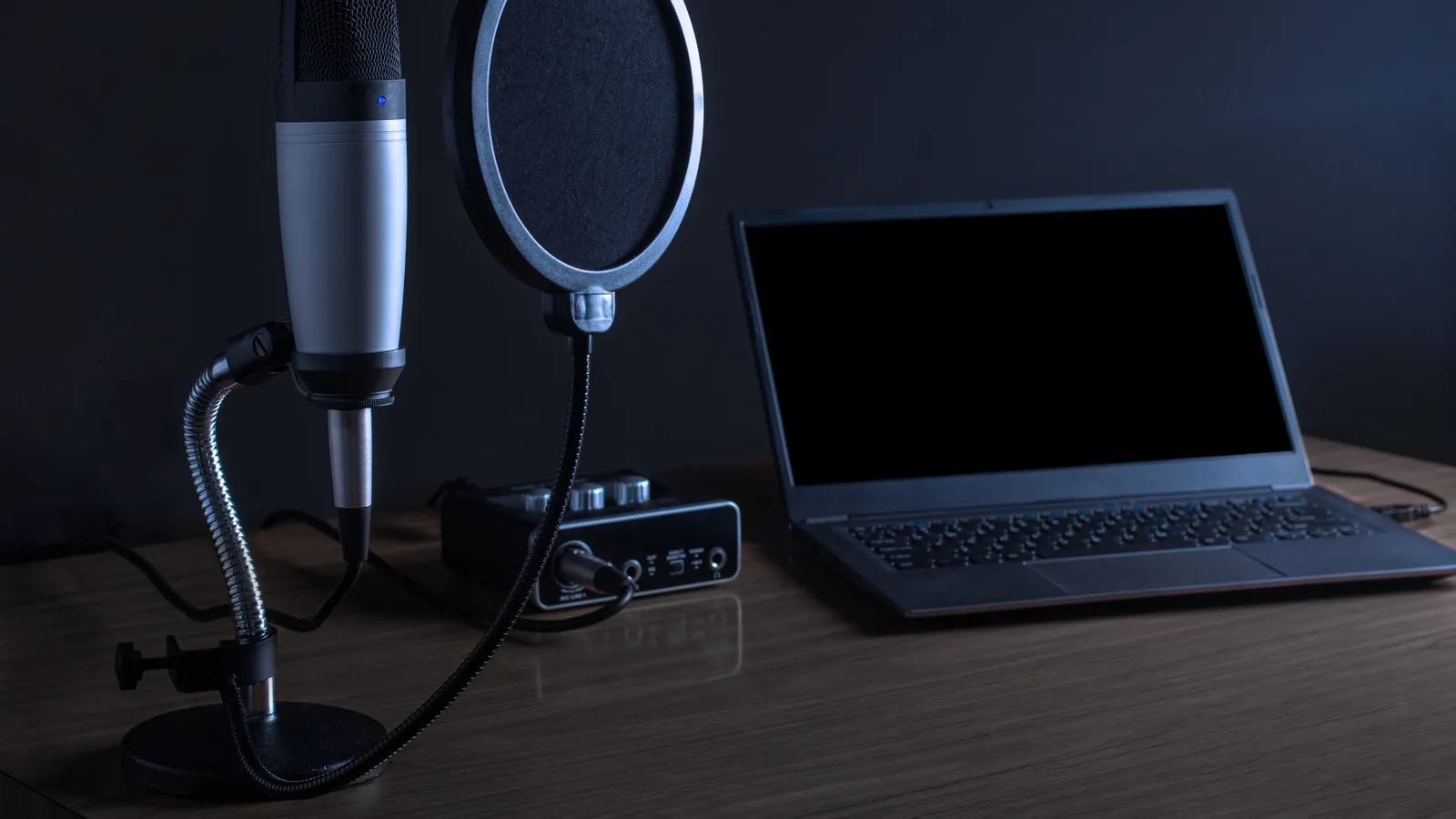
- Nobody is on camera. That is the whole definition: a production format, not a business model.
- From 1 February 2027, new channels need 1,000 subscribers plus either 8,000 qualified watch hours or 20 million Shorts views to join the Partner Program. Today the same two routes ask 4,000 hours and 10 million views.
- A working stack of Descript, ElevenLabs, Claude and Canva is $89 a month at list price, with free footage and music. Your time is the cost that hurts.
- YouTube will not monetize content made with generic templates that gives the impression of mass production. That rule has been in force since 15 July 2025.
- We pulled a $6,200 a month case study from this post. The source we cited no longer carries it, and we could not trace it anywhere else.
What is a faceless YouTube channel?
It is a channel where the video carries narration, footage, graphics and text, and nobody appears on camera. That is the whole definition. It is a production format, not a business model, and treating the two as one thing is where the money stories go wrong.
It is a production format, not a business model. Most money stories confuse the two.
The format is old. Documentary voiceover, screen recordings and audiobook narration were all faceless long before anyone put an AI in the middle. What changed is the cost of each station on the line. A script that took a day now takes an afternoon. A voice track that needed a booth now needs a text box. The same collapse in price runs through the AI automation tools small businesses buy for everything else.
That cost drop is real, and it is why the idea spread. It is also why the returns fell. When the work gets ten times cheaper for you, it gets ten times cheaper for everyone aiming at the same query. The scarce thing moves to what a tool cannot do for you: knowing something worth saying.
Which faceless YouTube channel ideas actually hold up?
The ones where the video contains something that did not exist before you made it. YouTube's monetization policy does the sorting for you here, and it is blunter than most guides admit. Read it once and half the popular ideas disqualify themselves.
YouTube updated that policy on 15 July 2025 and renamed it from "repetitious content" to "inauthentic content". The page bars "AI-generated content made with generic or unoriginal templates giving the impression of mass production". The clause ends "without adding the creator's original, authentic insights or perspective". It also names "image slideshows, templated storylines, or scrolling text with minimal or no narrative".
That rules out the top-ten-facts slideshow, the scrolling-text story channel and the reworded-article-over-stock-footage channel. Those are the ideas recommended most often, because they are the easiest to produce. Here is how six common ideas look once the policy is applied.
| Idea | What one video needs from you | Does it clear the policy? |
|---|---|---|
| Product teardown | Your own footage of the thing, used and measured | Yes. The footage is original |
| Process or software tutorial | A screen recording of you doing the task | Yes. The recording is original |
| Explainer from primary sources | Reading the filing, paper or docs yourself | Yes, when the reading is yours |
| Narrated original writing | A story or essay you wrote | Yes. The writing is original |
| Top-ten facts slideshow | A prompt and a stock library | No. Named as a templated slideshow |
| Reworded article plus stock clips | A rewrite and an AI voice | No. Generic template, mass produced |
Our reading of YouTube channel monetization policies, inauthentic content section, last updated 15 July 2025.
Notice what the passing ideas share. Each needs an input from the physical or documentary world that no model can supply. That is the whole filter. If a competitor with the same subscription can make your video by changing the prompt, you are not in a business.
What does a week of the work look like?
Five stations, every video, in this order: research, script, voice, assembly, packaging. Nobody publishes an audited hours-per-video figure for this format, so treat every number you have seen as somebody's estimate. What we can give you is the task list and the caps your subscriptions impose.

- 01Research: find questions people already ask, in search suggestions, the comments under adjacent channels and forum threads in the niche. This station decides everything downstream.
- 02Script: draft from a tight brief, then rewrite the first thirty seconds by hand. A generic opening is the most common reason a video dies in its first minute.
- 03Voice: record it yourself or generate it. A ten minute video runs about 1,400 words of narration if you read at 140 a minute. Time yourself against a clip before you trust that pace.
- 04Assembly: cut to the script with a locked template, inside the monthly allowance you actually bought.
- 05Packaging: title and thumbnail, written before the video where you can. Packaging is half the job and it is the half people skip.
Know the caps before you commit. Descript's Creator plan includes "30 media hours / month" and "800 AI credits / month", and every take you upload counts against the first. ElevenLabs Creator includes 121,000 credits a month. Four videos a week sounds fine until you meet the allowance you actually bought.
Want the same assembly line pointed somewhere with a shorter payback? We covered the tooling in AI automation tools and the wider kit in the small business AI tool stack.
What do the tools cost in 2026?
About $89 a month at list price, for one seat of each tool the five stations need. Read the basis, because it is not all the same. Descript, ElevenLabs and Claude are month-to-month prices. Canva is its yearly price divided by twelve, the only figure its page gives for one person. Pay month to month for all four and the total is higher. We read every price off the vendor's own pricing page on 21 September 2026.

Descript Creator runs $35 per person a month, or $24 if you pay for the year. Voice is next. ElevenLabs Creator is $22 a month with "121k credits per month", sitting between a $6 Starter tier and a $99 Pro tier. Claude Pro is $20, or $17 on the annual plan. Canva is the one to read carefully. Its page quotes "US$144/year for one person". The $12 everyone repeats is that figure divided by twelve, our arithmetic, not a price Canva prints.
Footage and music can genuinely be free. Pexels and the YouTube Audio Library both exist and both are licensed for this. A paid stock library is a convenience, not a requirement.
How does the money actually work?
YouTube pays you a share of ad revenue once you are in the Partner Program, and not a cent before. The thresholds are published. The revenue share is published. The per-view rate is not, so anyone quoting you an average RPM is estimating.
The entry bar doubles on 1 February 2027. Almost every guide you will find predates the announcement.
Start with the gate. YouTube's eligibility page gives two routes in. One is to "Get 1,000 subscribers with 4,000 qualified watch hours in the last 12 months". The other is "1,000 subscribers with 10 million qualified Shorts views in the last 90 days". Then comes the part almost no guide has caught up with.
| Requirement to join YPP | Today | From 1 February 2027 |
|---|---|---|
| Subscribers | 1,000 | 1,000 |
| Qualified watch hours | 4,000 in 12 months | 8,000 in 365 days |
| Or qualified Shorts views | 10 million in 90 days | 20 million in 90 days |
| Deadline to accept new terms | Not applicable | 31 January 2027 |
Today's figures: YPP overview and eligibility, read 21 September 2026. The 2027 figures: Changes to the YouTube Partner Program, read 21 September 2026, and YouTube's announcement, 10 August 2026. The 12843009 page now states only the 2027 numbers.
The entry bar doubles. Every faceless channel guide written before August 2026 was written against the old one, which is most of what you will find. So do the arithmetic yourself. Eight thousand hours is 480,000 minutes watched, and the views that takes depends on how long people stay.

Read that as a retention argument, not a view-count argument. Double how long people watch and you halve how many views you need. That is why the three-minute row and the eight-minute row are different businesses, and why pacing pays better than another upload.
Once you are in, YouTube's own earnings page says it "will pay them 55% of net revenues from ads displayed or streamed on their public videos". On the Shorts feed the share is "45% of the revenue allocated to them based on their share of views". What a single view earns is not published at all. It moves with your audience's country, your niche and the advertisers bidding.
Want the assembly line pointed where it pays?
We build content systems around your own customers' questions, with the same AI workflow and a shorter route to an invoice.
Where faceless YouTube channel ideas go wrong
The niche goes wrong first. Then the format. Then the stretch where nothing happens. None of them are tooling problems, which is inconvenient, because tooling is the part everyone enjoys solving.

The niche was chosen for you
Most lists of ideas are lists of formats that are easy to produce, sorted by how easy they are to produce. That is the wrong axis. A channel about a subject nobody searches for, executed beautifully, still starves. Demand first, craft second, tools third, and beginners reliably run that order backwards.
The format was already barred
Back to that policy page: templated storylines, scrolling text and slideshows with minimal narrative cannot be monetized. On Shorts, YouTube separately bars "non-original Shorts, such as unedited clips from others' movies or TV shows". The same line covers "reuploading other creators' content" and "compilations with no original content added". People build for months on these formats and find out at the application.
The quiet stretch outlasts the enthusiasm
Between your first upload and your first payment, the effort is real and the revenue is theoretical. From February 2027 that stretch is twice as long in watch-hour terms. YouTube also set out what keeps a channel active from that date. You need 1,000 qualified watch hours in 365 days, or 1 million Shorts views in 90 days. Two long-form videos or five Shorts every 90 days also counts.
A correction to what we published here in July
An article stood at this address from July 2026 until we retired it in September. It opened with a channel that supposedly reached 120,000 subscribers and about $6,200 a month in three months. We cited a roundup post for it. On 21 September 2026 we went back to that page, and the passage is not there.
We could not find the figure in a primary source either. There is no creator statement behind it, no payout screenshot, and nobody has interviewed the person it describes. The claim moves around content-marketing blogs in slightly different wordings, which is the usual signature of a number with nothing under it. So it is out, and the article is rebuilt around what we could check.
We applied the same standard across a set of AI income claims in five people making real money with AI.
How we would run the experiment on purpose
With a fixed window, a real niche and a date on which you are allowed to stop. Eight weeks, twelve videos, one subject you can name fifty open questions inside. That is ambitious enough to teach you something and small enough to survive beside a job.

- 01Write the fifty questions first. If you cannot reach fifty, the niche is too small and you have saved yourself eight weeks.
- 02Pick a format that clears YouTube's policy, and make sure it needs an input only you can supply.
- 03Publish twelve videos in eight weeks, hand-writing every opening. Keep the template locked so the only variable is the subject.
- 04At week eight, read average view duration and the retention graph per video, not subscriber count. Views flatter you. Retention does not.
- 05Decide on the data. One video outperforming the rest by multiples earns another eight weeks. A flat line everywhere is an answer too, and by our arithmetic it cost you two months of the stack above.
There is a quieter version of this play, and it is the one we usually point owners towards when they ask. Point the same assembly line at your own customers' questions and publish on your own channels. It will not make you a YouTuber, and most faceless YouTube channel ideas are not trying to. It will make you the business that answers first when someone searches. Whether that turns into invoices depends on your offer and your follow-up, not on the videos.
The same logic now applies to AI search as well as to the blue links. We covered how that citation game works in how to get cited by AI search.
- YouTube Help, Partner Program overview and eligibility, read 21 September 2026
- YouTube Official Blog, changes to the Partner Program, 10 August 2026
- YouTube Help, Changes to the YouTube Partner Program, read 21 September 2026
- YouTube Help, channel monetization policies (inauthentic content), updated 15 July 2025
- YouTube Help, Shorts monetization policies, read 21 September 2026
- YouTube Help, How to earn money on YouTube, read 21 September 2026
- Descript pricing, read 21 September 2026
- ElevenLabs pricing, read 21 September 2026
- Claude pricing, read 21 September 2026
- Canva pricing, read 21 September 2026
How this was made · Drafted with AI tools from the sources above. Every number was checked against its source by a person. Reviewed and approved by our editorial team. Samar Faizan, editor of record, holds editorial responsibility.